Is It Wrong to Lie on a Resume? The Truth About Resume Fraud and Consequences
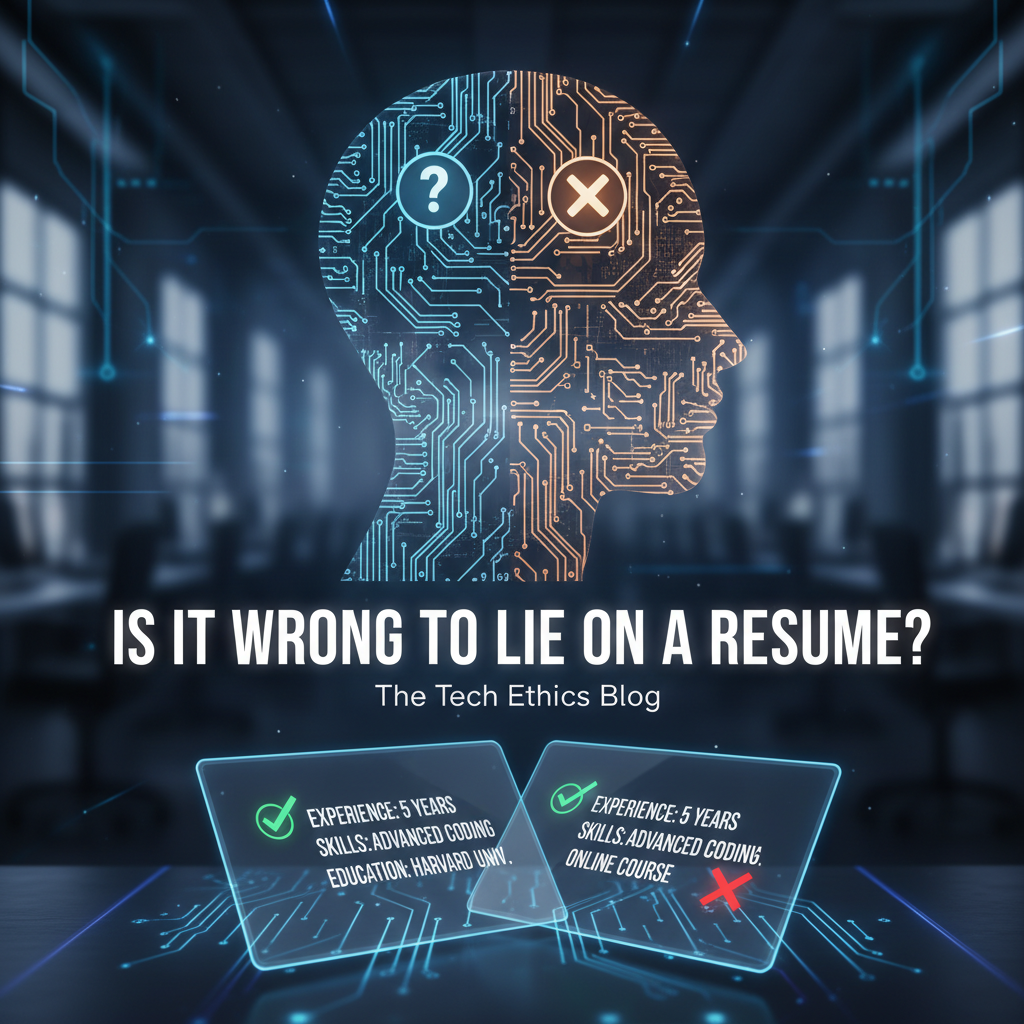
Is It Wrong to Lie on a Resume? The Risks, Consequences, and Better Alternatives
We’ve all felt the temptation. You see a "perfect" job opening, but you’re missing one specific certification. Or maybe you have a six-month employment gap you’re desperate to hide. The thought crosses your mind: "What if I just tweaked this date? Who would actually know?"
You aren't alone. In a competitive job market, the pressure to stand out is immense. However, the short-term gain of landing an interview is rarely worth the long-term devastation of being caught. And in 2025, with advanced background checks and AI-driven vetting, getting caught is easier than ever.
This guide goes beyond simple "dos and don'ts." We delve into the mechanics of how employers verify facts, the legal vs. ethical implications, and most importantly, how to highlight your strengths honestly so you never feel the need to fabricate your history.
The Short Answer: Is It Illegal?
While lying on a resume is generally not a crime in the sense that you will go to jail for it (in most private sector cases), it is fraud. Depending on the jurisdiction and the specific nature of the lie (e.g., claiming a medical license you don't have), it can lead to legal action, immediate termination for cause, and even lawsuits for restitution of wages.
The Verdict: It is ethically wrong, professionally dangerous, and increasingly futile.
The High Stakes: What Happens When You Get Caught?
Many job seekers assume the worst-case scenario is simply not getting the job. The reality is far harsher.
1. Immediate Termination (Even Years Later)
If you are hired based on false pretenses, your employment is built on a house of cards. Discovery of a resume lie is almost universally grounds for immediate firing, regardless of your performance. There is no statute of limitations on resume fraud in the workplace.
2. Reputational "Blacklisting"
Industries are smaller than you think. Recruiters talk. If you are flagged as a candidate who falsified credentials, that information can travel to other hiring managers, effectively blacklisting you from top companies in your sector.
3. Legal Consequences
In cases involving government jobs or licensed professions (nursing, engineering, law), lying on an application can constitute a criminal offense. FindLaw: Can Lying on a Resume Be a Crime?
10 Common Resume Lies (And How They Are Exposed)
Competitor analysis shows that candidates often resort to specific fabrications. Here is why they are dangerous and how they are easily detected.
1. Stretching Employment Dates to Hide Gaps
The Lie: Changing a start date from March to January to cover a gap. How You Get Caught: A simple call to your previous employer or a verification through a service like The Work Number reveals exact start and end dates instantly.
2. Inflating Job Titles
The Lie: Calling yourself a "Manager" when you were an "Associate." How You Get Caught: Reference checks and LinkedIn cross-referencing. If your LinkedIn profile doesn't match your resume, it’s an immediate red flag.
3. Faking Academic Degrees
The Lie: Claiming you finished a degree when you were a few credits short. How You Get Caught: The National Student Clearinghouse allows employers to verify degrees in seconds. This is one of the easiest lies to catch.
4. Exaggerating Technical Skills
The Lie: Listing "Expert Python" when you’ve only done a tutorial. How You Get Caught: Technical assessments and whiteboard interviews. You will be asked to demonstrate the skill live, leading to humiliation if you cannot perform.
5. Fabricating Responsibilities
The Lie: Taking credit for a project you only observed. How You Get Caught: Behavioral interview questions ("Tell me about a specific challenge you faced...") allow skilled interviewers to drill down until the lack of depth is obvious.
6. Lying About Current Salary
The Lie: Inflating past salary to negotiate a higher offer. How You Get Caught: While some regions ban asking for salary history, many do not. W-2 verification or direct background checks can reveal the truth.
7. False Proficiency in Languages
The Lie: Claiming to be "Fluent in Spanish." How You Get Caught: The interviewer (or a colleague brought in) starts speaking Spanish to you.
8. Making Up Volunteer Work
The Lie: Inventing charity work to look "well-rounded." How You Get Caught: Background checks often verify volunteer roles, especially if they are substantive.
9. Fake Certifications
The Lie: Listing a PMP or CPA license you don't hold. How You Get Caught: Credentialing bodies maintain public, searchable databases.
10. The "Ghost" Company
The Lie: Listing a company that has gone out of business to prevent verification. How You Get Caught: Investigators can verify your employment through tax records (like W-2s) even if the company is defunct.
How Employers Catch Liars: The Modern Toolkit
It's not just about calling references anymore.
- Automated Background Checks: Services check criminal records, credit reports, and education databases automatically.
- Social Media Audits: Discrepancies between your resume and your LinkedIn (or even Facebook) timeline are dead giveaways.
- Backdoor References: Recruiters often reach out to mutual connections you didn't list as references to get the unvarnished truth.
Ethical Alternatives: Strategic Framing vs. Lying
You don't need to lie to make your resume impressive. Use Strategic Framing instead.
| Scenario | The Lie (Don't Do This) | Strategic Framing (Do This) |
|---|---|---|
| Employment Gap | "I was working at [Fake Company] / Extended dates." | "Took a planned career break for professional development/caregiving. Completed [Course Name] during this time." |
| Unfinished Degree | "B.S. in Computer Science (Completed)" | "B.S. in Computer Science (Candidate) - Completed 110/120 Credits." |
| Lack of Experience | "Managed a team of 10." | "Led project coordination for a cross-functional team of 10." (Focus on function, not title). |
| Weak Skills | "Expert in SEO." | "Familiar with SEO principles; currently completing Advanced SEO certification." |
How JobSeekerTools Can Help
Struggling to make your resume shine without bending the truth? You don't need to fabricate experience; you just need to better articulate the value you already have.
JobSeekerTools helps you identify and highlight your transferable skills, format your resume for ATS systems legitimately, and optimize your bullet points to sound authoritative and professional—no lying required. Our tools analyze your genuine experience and match it to job descriptions to find the real overlap.
Build a truthful, high-impact resume with JobSeekerTools today.
Conclusion
Is it wrong to lie on a resume? Yes. Is it worth it? Almost never. The anxiety of maintaining a deception, combined with the high probability of being caught by modern verification technology, makes it a losing strategy.
Instead of faking it, focus on making it. Polish your genuine achievements, acquire the skills you lack, and use tools that help you present your authentic self in the best possible light. Confidence comes from competence, not fabrication.
Visual Guides
The Anatomy of a Resume Background Check
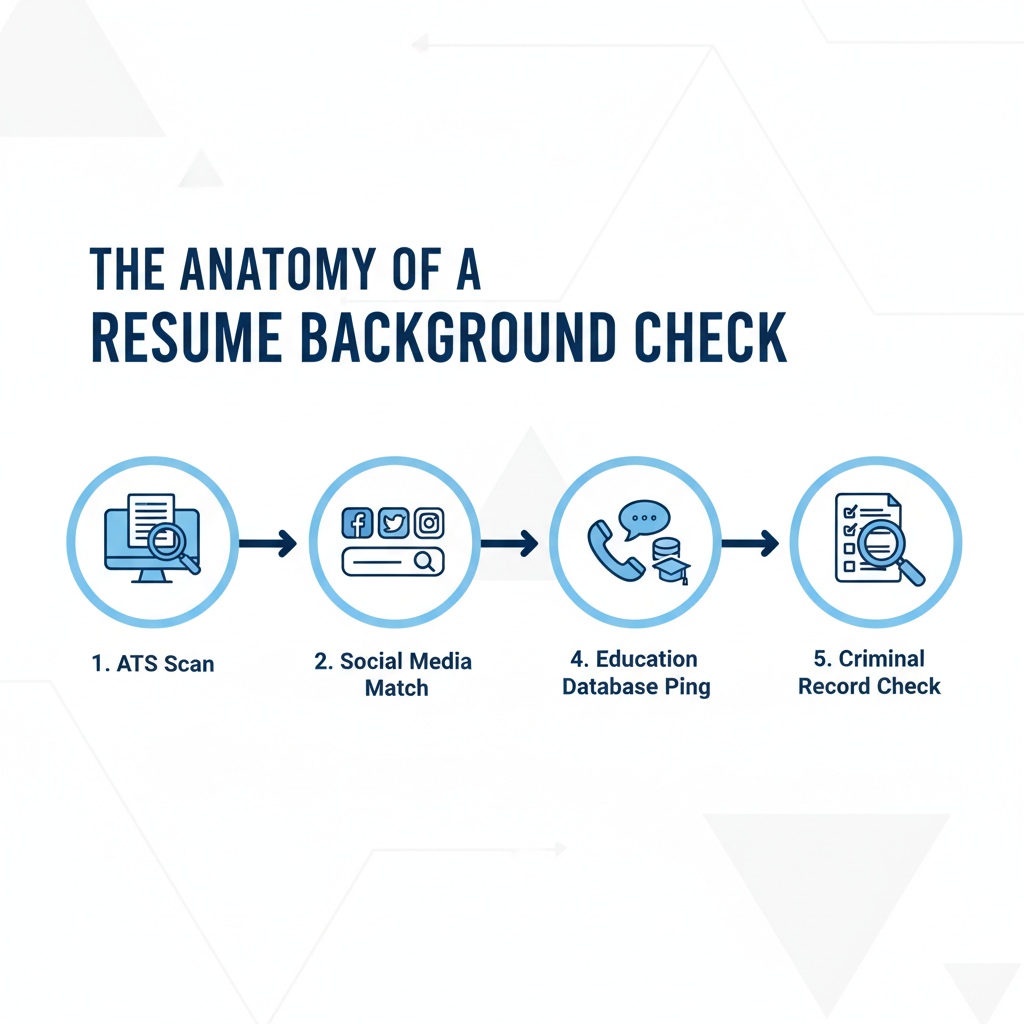
What Happens After You Hit "Submit"
1. ATS Scan
- Automated parsing of resume content
- Keyword matching against job description
- Initial filtering of candidates
2. Social Media Match
- Verification of professional online presence (e.g., LinkedIn)
- Consistency check between resume and social profiles
- Cultural fit assessment
3. Reference Call
- Contacting provided references
- Verification of employment dates and titles
- Discussion of work ethic and performance
4. Education Database Ping
- Verification of degrees earned
- Confirmation of dates of attendance
- Validation of institutions
5. Criminal Record Check
- Background screening for criminal history
- Identity verification
- Final security clearance
Red Flag vs. Green Light Phrases
Comparison of Vague vs. Verifiable Resume Language
1. Ownership vs. Participation
- Red Flag: "Participated in project..." (Implies passive observation)
- Green Light: "Spearheaded initiative that increased revenue by..." (Demonstrates active leadership)
- Focus on verifiable impact and specific contributions
2. Results vs. Duties
- Red Flag: "Responsible for sales..." (Describes a job description)
- Green Light: "Achieved 20% growth in quarterly sales..." (Describes an accomplishment)
- Use quantifiable metrics over generic task lists
3. Specificity vs. Generalization
- Red Flag: "Knowledge of coding..." (Vague and unproven)
- Green Light: "Developed full-stack application using Python and React..." (Concrete and technical)
- Contextualize skills with actual application
4. Action vs. Assistance
- Red Flag: "Helped with..." (Minimizes role)
- Green Light: "Collaborated to launch..." or "Facilitated the deployment of..." (Professional and active)
- Strong action verbs show professional engagement
5. Clarity vs. Ambiguity
- Red Flag: "Worked on various things..." (Suspiciously non-specific)
- Green Light: "Managed daily operations for a team of 10..." (Clear scope)
- Define the scale and scope of your work explicitly
Frequently Asked Questions
Can I get sued for lying on my resume?
Generally, you won't be sued for a standard resume lie unless it involves fraud that caused financial damage to the company or involved unlicensed practice in regulated fields (like medicine or law). However, you will likely be fired for cause, which can legally deny you severance or unemployment benefits.
Do employers really check dates of employment?
Yes, this is one of the most common checks. Employers understand that months can be fuzzy, but discrepancies of more than a month or two raise immediate red flags about your honesty regarding employment gaps.
Is omitting information considered lying?
Not necessarily. A resume is a marketing document, not a legal affidavit. You are not required to list every job you've ever had. However, omitting a job to hide a negative termination while implying continuous employment elsewhere creates a "lie by omission" that can backfire.