Resume vs Cover Letter: The 2025 Guide to Winning the Job
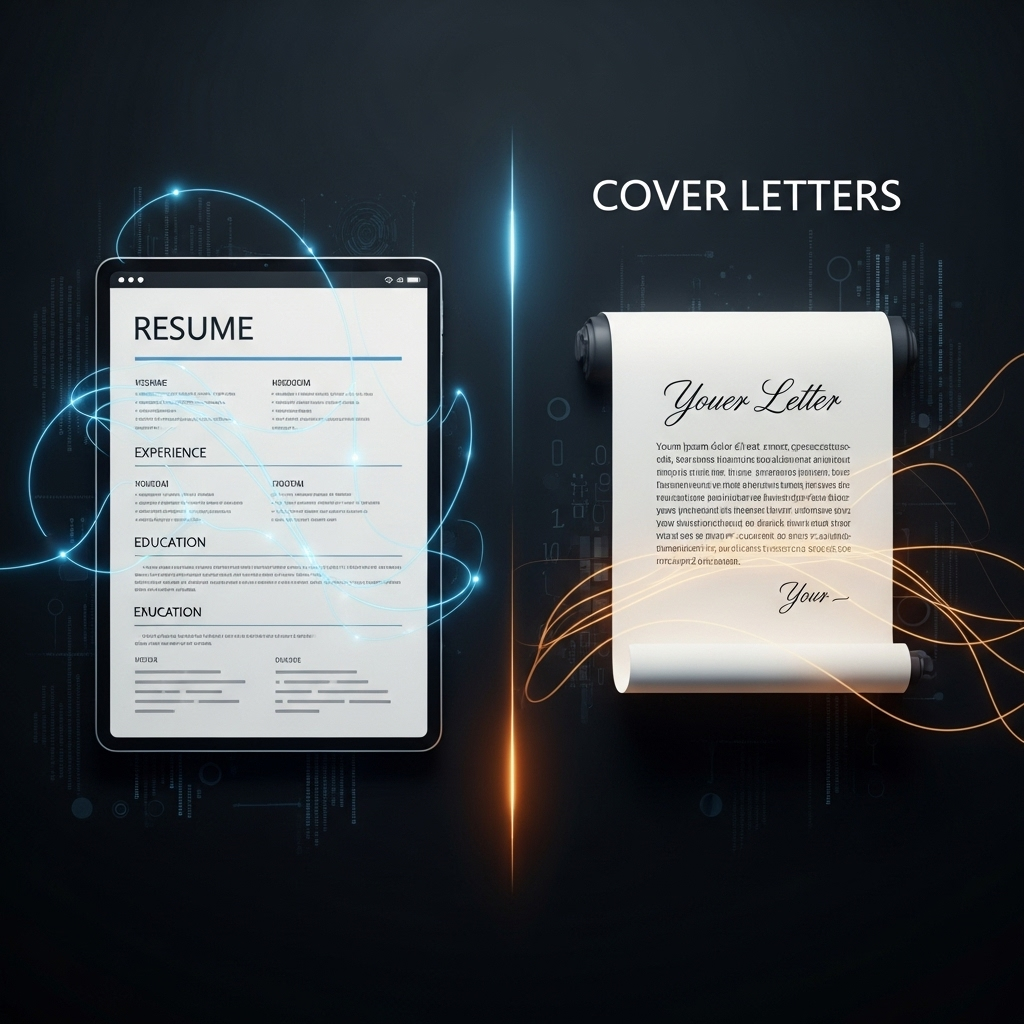
Article Body:
Resume vs Cover Letter: What's the Real Difference?
Feeling uncertain about whether your resume and cover letter are pulling their weight? You're not alone. Many job seekers treat them as interchangeable documents, failing to leverage their unique strengths. This guide cuts through the confusion. We'll go beyond the basics to provide a masterclass on the strategic differences between a resume and a cover letter, ensuring you not only understand the "what" but also the "why" and "how" to make them work for you.
The Core Purpose: A Side-by-Side Comparison
At its heart, the difference is simple: a resume is about proof, and a cover letter is about persuasion. One presents the facts of your career; the other tells the story.
| Feature | Resume | Cover Letter |
|---|---|---|
| Purpose | To provide a factual, scannable summary of your skills, experience, and qualifications. | To introduce yourself, express interest in a specific role, and persuade the reader you're the best fit. |
| Content | Bullet points, concise phrases, and keywords. Focused on past achievements and responsibilities. | Narrative paragraphs that connect your past experiences to the future needs of the company. |
| Tone | Formal and objective. | Professional yet personable and persuasive. |
| Format | Structured, often chronological, and typically one page. | A traditional business letter format with a clear introduction, body, and conclusion. |
| Tense | Primarily past tense (e.g., "Managed a team of 5"). | Primarily present and future tense (e.g., "I am confident I can bring my skills in X to achieve Y"). |
Your Resume: The Blueprint of Your Career
Think of your resume as an evidence-based report for the hiring manager and, just as importantly, for the Applicant Tracking System (ATS). With over 98% of Fortune 500 companies using ATS to filter candidates, a properly optimized resume is non-negotiable. Jobscan.
Key Resume Strategies for 2025:
- Keyword Optimization: Your resume must be tailored with keywords directly from the job description.
- Quantifiable Achievements: Don't just list duties. Show impact. Instead of "Managed social media," write "Grew social media engagement by 45% over six months."
- Clear Formatting: Use standard fonts and clear sections (Summary, Experience, Education, Skills). Avoid tables, columns, and graphics that can confuse an ATS.
Feeling overwhelmed by ATS? This is where JobSeekerTools can be a game-changer. Our platform helps you analyze job descriptions and optimize your resume to ensure it gets past the bots and into human hands.
Your Cover Letter: The Story Behind the Blueprint
If the resume is the "what," the cover letter is the "so what?". It’s your chance to connect the dots for the hiring manager and show genuine enthusiasm and cultural fit. It answers the question: "Why are you the perfect person for this job at this company?"
3 Steps to a Compelling Cover Letter:
- The Hook (Opening Paragraph): Start strong. Reference the specific job you're applying for and state your 1-2 most compelling qualifications that make you a great fit. Avoid the generic "I am writing to apply for..."
- The Body (2-3 Paragraphs): This is where you tell your story.
- Pick 2-3 key requirements from the job description.
- For each requirement, provide a specific example from your past where you demonstrated that skill or achieved a similar result. . Explain how your past success will translate to future success for their company.
- The Close (Final Paragraph): Reiterate your enthusiasm and your core value proposition. Confidently state your interest in an interview to discuss how you can contribute to the team's goals.
Do's and Don'ts for Job Applications
Resume
- Do: Use action verbs and quantify your accomplishments.
- Do: Tailor it for every single application.
- Don't: Exceed two pages (unless you have extensive, relevant experience).
- Don't: Include personal information like marital status or photos.
Cover Letter
- Do: Address the hiring manager by name if possible.
- Do: Show you've researched the company and understand its mission or recent achievements.
- Don't: Simply repeat what's on your resume.
- Don't: Make it longer than one page.
Conclusion: Two Documents, One Goal
The "resume vs cover letter" debate isn't about choosing one over the other. It's about understanding their distinct, complementary roles. A resume proves you can do the job. A cover letter persuades them that you should be the one to do it. By mastering both, you present a complete, compelling picture of your professional value and move one giant step closer to landing the interview.
Visual Guides
Resume vs. Cover Letter at a Glance
An infographic comparing the key differences between a resume vs a cover letter, highlighting their unique purpose and format for a job application.
Key Differences
This infographic breaks down the essential distinctions between a resume and a cover letter to help you tailor your job application effectively.
Purpose
- Resume: To provide a concise, factual overview of your professional qualifications, skills, and work history. It's a snapshot of your career.
- Cover Letter: To introduce yourself, express your interest in a specific role, and explain why you are the best candidate. It connects your skills to the company's needs.
Content
- Resume:
- Focuses on past accomplishments and responsibilities.
- Uses bullet points and action verbs.
- Typically includes: Contact Info, Summary/Objective, Work Experience, Education, Skills.
- Cover Letter:
- Focuses on your motivation and future potential.
- Written in paragraph form, like a formal letter.
- Highlights 2-3 key achievements relevant to the job description.
Tone
- Resume: Formal and objective.
- Cover Letter: Professional yet personable. It allows you to inject your personality and enthusiasm.
Format
- Resume:
- Structured and skimmable.
- Length: Typically one page, two for very experienced professionals.
- Formatting: Clean, consistent, and easy to read.
- Cover Letter:
- Standard business letter format.
- Length: 3-4 paragraphs, never more than one page.
- Formatting: Includes your contact info, date, recipient's info, salutation, body, and closing.
The Perfect Cover Letter Checklist
A comprehensive checklist graphic detailing the essential steps for writing a winning cover letter to accompany your resume.
A step-by-step guide to ensure your cover letter is polished, professional, and persuasive.
Formatting & Structure
- Contact Information: Your name, address, phone, and email are included and correct.
- Date: The current date is included.
- Recipient Information: You've included the hiring manager's name, title, and the company's address.
- Salutation: You've addressed the hiring manager by name (e.g., "Dear Ms. Smith,"). Avoid "To Whom It May Concern."
- Clear Paragraphs: The letter is organized into 3-4 clear paragraphs (Introduction, Body, Conclusion).
- Professional Closing: You've used a professional closing like "Sincerely," or "Best regards,".
- Signature: You've left space for a signature (if printing) and typed your name.
- Length: The entire letter is on a single page.
Content
- Introduction:
- State the specific job you are applying for.
- Mention where you saw the job posting.
- Briefly state your enthusiasm for the role.
- Body Paragraphs (1-2):
- You've connected your skills and experience directly to the job description.
- You've included 2-3 specific, quantifiable achievements or examples.
- You've shown genuine interest in the company's mission, values, or products.
- You've used keywords from the job description.
- Conclusion:
- You've reiterated your interest in the role.
- You've included a clear call to action (e.g., "I am eager to discuss my qualifications in an interview.").
- You've thanked the hiring manager for their time and consideration.
Final Review
- Proofread for Typos: You have read the letter out loud to catch spelling and grammar errors.
- Check for Clarity: The sentences are clear, concise, and easy to understand.
- Verify Name and Title: You have double-checked the spelling of the hiring manager's name and their title.
- Tailored for the Job: The letter is customized for this specific job and not a generic template.
- File Format: You have saved the file in the requested format (usually PDF) with a professional file name (e.g., "YourName-Cover-Letter.pdf").
Frequently Asked Questions
Do I always need to submit a cover letter?
Yes, unless the application explicitly says not to. Submitting a tailored cover letter shows initiative and provides a valuable opportunity to stand out. It's always better to have one and not need it than to need one and not have it.
Can I use the same resume and cover letter for every job?
No. This is one of the biggest mistakes job seekers make. Companies use ATS to screen for specific keywords from their job description. A generic resume will likely be filtered out. A generic cover letter shows a lack of genuine interest. Always tailor both documents.
What's more important, the resume or the cover letter?
They are equally important but for different reasons. The resume is crucial for getting past the initial ATS screening. The cover letter is often the deciding factor for the human hiring manager when choosing who to interview.