15+ Essential Skills Examples for Students to Land a Job in 2025
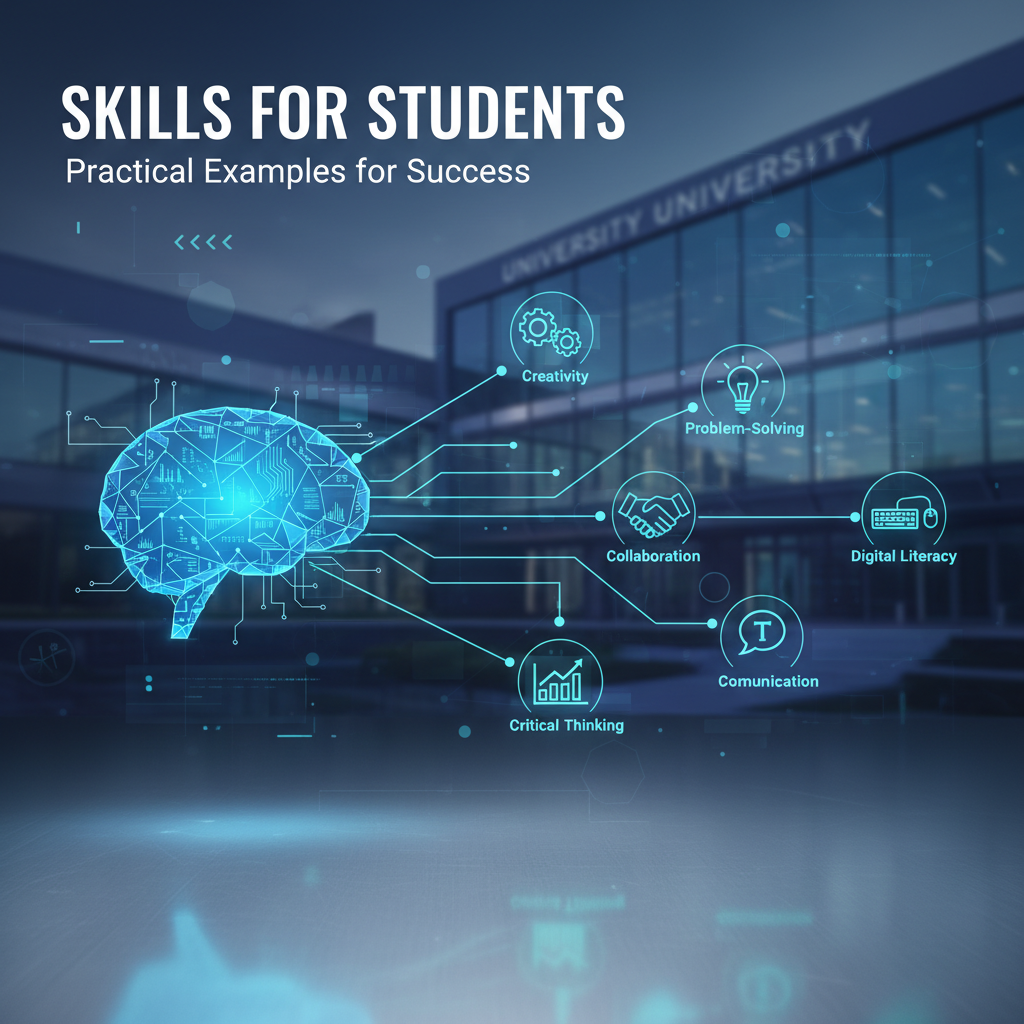
15+ Essential Skills Examples for Students to Land a Job in 2025
Staring at a blank resume, wondering how your class projects or part-time café job translate into "hireable" skills? You're not alone. Many students struggle to articulate their value to potential employers. While other guides offer generic advice, this article provides a comprehensive, actionable playbook filled with practical skills examples for students, designed to get your resume noticed by recruiters and Applicant Tracking Systems (ATS).
An ATS is a software application that scans resumes for relevant keywords, and over 98% of Fortune 500 companies use one to filter candidates Jobscan's 2025 ATS Usage Report. To beat the bots and impress a human, you need to speak their language. This guide will teach you how.
Hard Skills vs. Soft Skills: What You Need to Know
First, let's clarify the two main categories of skills. You need a healthy mix of both to be a competitive candidate.
- Hard Skills: These are technical, teachable, and measurable abilities, often learned through education or specific training. Think of them as the "what you can do."
- Soft Skills: These are interpersonal or "people" skills that describe your work style and how you interact with others. Think of them as the "how you do it."
Employers are increasingly looking for well-rounded candidates who have both the technical know-how and the personal attributes to succeed in a team environment.
Top 7 Hard Skills Examples for Students (with Resume Examples)
Here are some of the most in-demand hard skills. Don't just list the skill; provide evidence of how you've used it.
- Data Analysis (Excel, Python, R, SPSS):
- Analyzed a dataset of 5,000+ survey responses using Python (Pandas library) for a sociology research project, identifying three key trends in public opinion.
- Software & Tools (e.g., Adobe Creative Suite, Canva, Salesforce, Jira):
- Designed 15+ social media graphics for the University Marketing Club using Canva, increasing student engagement by 25% over one semester.
- Programming Languages (Python, Java, JavaScript, C++):
- Developed a functional e-commerce website front-end using JavaScript and React as part of a final year web development course.
- Foreign Languages (e.g., Spanish, Mandarin, French):
- Achieved professional working proficiency in Spanish, demonstrated by translating a 10-page marketing document for a local non-profit.
- Research & Information Gathering:
- Conducted comprehensive literature reviews for 5+ academic papers, synthesizing information from over 50 scholarly articles and primary sources.
- Project Management (e.g., Asana, Trello):
- Coordinated a 4-person team to deliver a semester-long engineering project ahead of schedule using Trello for task management and progress tracking.
- Technical Writing:
- Authored a 20-page technical user manual for a software application created in a computer science course, simplifying complex functions for non-technical users.
Top 8 Soft Skills Examples for Students (and How to Prove Them)
Soft skills can be harder to prove, but they are critical. The key is to demonstrate them through your experiences.
- Communication (Written & Verbal):
- How to Prove It: Presented research findings to a class of 40+ students; wrote clear and concise essays; tutored peers in complex subjects.
- Teamwork & Collaboration:
- How to Prove It: Successfully completed 10+ group projects; collaborated with 3 other team members to organize a university event for 100+ attendees.
- Problem-Solving & Critical Thinking:
- How to Prove It: Identified a critical flaw in a group project's methodology and proposed a revised approach that was adopted by the team and praised by the professor.
- Leadership:
- How to Prove It: Led a study group of 5 peers, resulting in an average grade increase of 15% for the group; served as Treasurer for the Debate Club, managing a small budget.
- Time Management & Organization:
- How to Prove It: Successfully balanced a 15-hour/week course load with a part-time job and extracurricular activities, consistently meeting all deadlines.
- Adaptability:
- How to Prove It: Quickly learned a new project management software (Asana) mid-semester to improve team workflow during a capstone project.
- Work Ethic:
- How to Prove It: Consistently received positive feedback from professors and part-time job managers for reliability and dedication.
- Creativity:
- How to Prove It: Devised an innovative marketing campaign for a case competition that was highlighted by judges as a standout strategy.
How to Find Your Skills: A 3-Step Guide
- Deconstruct Your Experiences: Review your course syllabi, part-time job duties, and volunteer roles. For each, list 3-5 concrete tasks you performed.
- Assign Verbs and Skills: For each task, assign a powerful action verb and identify the underlying hard or soft skill.
- Quantify Your Impact: Wherever possible, add numbers to show the scale and impact of your work. How many people? How much money? What percentage of improvement?
Manually tailoring your resume for every single job application is time-consuming and prone to error. To ensure you're including the right keywords and passing the ATS scan every time, consider using an intelligent platform. JobSeekerTools analyzes your resume against the job description, providing an instant match score and highlighting the exact skills you need to add to catch a recruiter's eye.
Conclusion
Your time as a student is rich with experiences that have given you valuable, marketable skills. The key is not just to have them, but to identify them, articulate them effectively, and align them with the needs of the employer. By showcasing a strong combination of hard and soft skills with concrete examples, you can create a compelling resume that opens doors to the opportunities you deserve.
Visual Guides
The Anatomy of a Skill-Based Resume Bullet Point
A perfectly crafted resume bullet point has three key components. This guide breaks down how to structure your bullet points to effectively showcase your skills and accomplishments.
1. Start with a Powerful Action Verb
This is the foundation of your bullet point. It should be strong, descriptive, and relevant to the skill you're highlighting.
- Examples: Accelerated, Engineered, Negotiated, Launched, Streamlined
2. Describe the Task or Project
Briefly explain the task you performed or the project you worked on. Provide context for your accomplishment.
- Example: "...the checkout process for an e-commerce website..."
3. End with a Quantifiable Result
Whenever possible, include a metric that demonstrates the impact of your work. This makes your accomplishment tangible and impressive.
- Examples:
- "...resulting in a 15% increase in conversion rates."
- "...reducing server costs by 30%."
- "...securing 5 new enterprise clients in the first quarter."
Putting It All Together:
- Weak Bullet Point: "Responsible for improving the website."
- Strong Bullet Point: "Streamlined the checkout process for an e-commerce website, resulting in a 15% increase in conversion rates."
Infographic showing how to write skills examples for students on a resume with action verbs and quantifiable results.
Hard Skills vs. Soft Skills on a Student Resume
Understanding the difference between hard and soft skills is crucial for building a strong student resume. This guide provides a clear comparison to help you highlight both.
Hard Skills (Technical Abilities)
Hard skills are specific, teachable abilities that can be defined and measured. They are often job-specific and can be learned through education, training, or certifications.
- Python 🐍
- Data Analysis 📊
- SEO 🔍
- Graphic Design 🎨
- Video Editing 🎬
Soft Skills (Interpersonal Qualities)
Soft skills are personal habits and traits that shape how you work, on your own and with others. They are often transferable across different jobs and industries.
- Problem-Solving 💡
- Communication 💬
- Adaptability 🔄
- Teamwork 🤝
- Leadership 🌟
Why Both Matter:
- Hard skills get you the interview by showing you have the technical qualifications for the job.
- Soft skills help you succeed in the role by demonstrating you can collaborate, solve problems, and fit into the company culture.
A balanced resume showcases both, painting a complete picture of your capabilities as a candidate.
Comparison chart of hard skills versus soft skills examples for students' resumes.
Frequently Asked Questions
Q1: What if I don't have any real work experience? A1: Focus on academic projects, extracurricular activities, volunteer work, and even relevant personal projects. If you led a team for a major class project, that's leadership and project management. If you manage a personal blog or coding project on GitHub, that showcases technical skills and self-motivation.
Q2: How many skills should I list on my resume? A2: Aim for a dedicated "Skills" section with 8-12 of your most relevant hard skills. Your soft skills should be demonstrated through the bullet points in your "Experience" and "Projects" sections, not just listed. Quality and relevance always beat quantity.
Q3: Should I include skills I'm still learning? A3: Yes, but be honest. You can frame them as "Familiar with [Skill]" or "Basic knowledge of [Skill]". This is especially useful for technical skills like programming languages where you may not be an expert yet but have foundational knowledge.