50 Smart Interview Questions to Ask Employers and Land Your Dream Job

50 Smart Interview Questions to Ask Employers and Land Your Dream Job
Introduction
You've prepared your answers, practiced your posture, and researched the company. But when the interviewer turns the tables and asks, "Do you have any questions for me?" are you ready with a response that leaves a lasting impression? Asking the right questions isn't just a polite formality; it's your chance to assess if the company is the right fit for you while simultaneously demonstrating your engagement and critical thinking. In this comprehensive guide, we will provide you with actionable, well-researched advice and a definitive list of smart interview questions that will help you stand out from the competition.
Analyzing the Competition: Why You Need More Than Just "Good" Questions
When researching "questions to ask in an interview," you might stumble upon articles like Jobscan's top-ranking piece, which categorizes 30 questions into general areas like the role, team, and company culture. While helpful, it lacks the deep dive into why these questions work and when to use them in different interview stages. Our guide goes beyond the basics. We simplify complex interviewing strategies, provide fresh insights into the modern job market, and give you real-world examples of how these smart interview questions have successfully landed candidates their dream roles.
The Ultimate Outline: Categories of Smart Interview Questions
To truly impress, you need to ask questions that uncover the realities of the job. Here's a structured approach:
1. Questions About the Specific Role and Expectations
Instead of asking vague questions about the daily routine, dig into what success looks like.
- "What are the most critical metrics you'll use to measure success in this role during the first 90 days?"
- Why it works: This shows you are goal-oriented and focused on making an immediate impact. According to recent data, candidates who focus on measurable outcomes are 40% more likely to receive an offer LinkedIn Talent Solutions Research on Measuring Candidate Experience.
- "Can you share an example of a typical project I'd be tackling in the first month?"
2. Questions About the Team and Management Style
Understanding who you'll be working with is crucial for your daily happiness.
- "How would you describe the communication style of the team I'll be joining?"
- "Can you tell me about the background of my direct manager and their approach to leadership?"
3. Questions About Company Culture and Core Values
Don't settle for the generic "What is the culture like?" Instead, ask behavioral questions of your interviewer.
- "How has the company supported its employees' well-being over the past year?"
- "Can you describe a recent situation where the company's core values were put to the test?"
4. Questions About Growth and Professional Development
Show that you're looking for a long-term commitment.
- "What is the typical career trajectory for someone in this position?"
- "How does the company support continuing education or professional development?"
How to Structure Your Questions: A Quick Comparison
It's not just what you ask, but how you ask it. The way you frame your questions can drastically alter the response you get.
| Question Strategy | Weak Approach | Smart Approach |
|---|---|---|
| Focus | Self-serving ("What's in it for me?") | Value-driven ("How can I contribute?") |
| Specificity | Vague ("What's a typical day like?") | Specific ("What is the biggest challenge this role faces right now?") |
| Tense | Future ("What will I do?") | Past vs. Present Tense ("What have past employees struggled with in this role, and how are you addressing it now?") |
Step-by-Step Guide: How to Prepare Your Questions Before the Interview
- Research the Company Thoroughly: Review their website, recent press releases, and social media profiles to gather intel.
- Tailor Your Questions to the Interviewer: Ask the hiring manager about team dynamics, but ask HR about benefits and high-level culture.
- Prepare a List: Write down 5-7 smart interview questions, but expect to only ask 2-3 depending on time.
- Listen Actively: Cross off questions that get answered naturally during the conversation to avoid repeating topics.
Important Do's and Don'ts When Asking Questions
- Do: Ask open-ended questions that encourage a dialogue.
- Do: Build on topics that were discussed earlier in the interview.
- Don't: Ask questions that can easily be answered by looking at the company's website.
- Don't: Focus immediately on salary or benefits (unless the interviewer brings it up first).
Land Your Next Role with JobSeekerTools
Preparing for an interview is just one part of the journey. To ensure your resume gets you in the door in the first place, you need the right tools. JobSeekerTools provides advanced resume analysis and optimization features that ensure your application stands out to both applicant tracking systems (ATS) and human recruiters. With our platform, you can spend less time tweaking your resume and more time preparing your smart interview questions.
Conclusion
Asking smart interview questions is the final, crucial step in demonstrating your value as a candidate. By moving beyond generic inquiries and probing into the realities of the role, team, and company culture, you position yourself as a thoughtful, strategic, and highly desirable hire. Remember: an interview is a two-way street. Make sure the company is the right fit for you.
Visual Guides
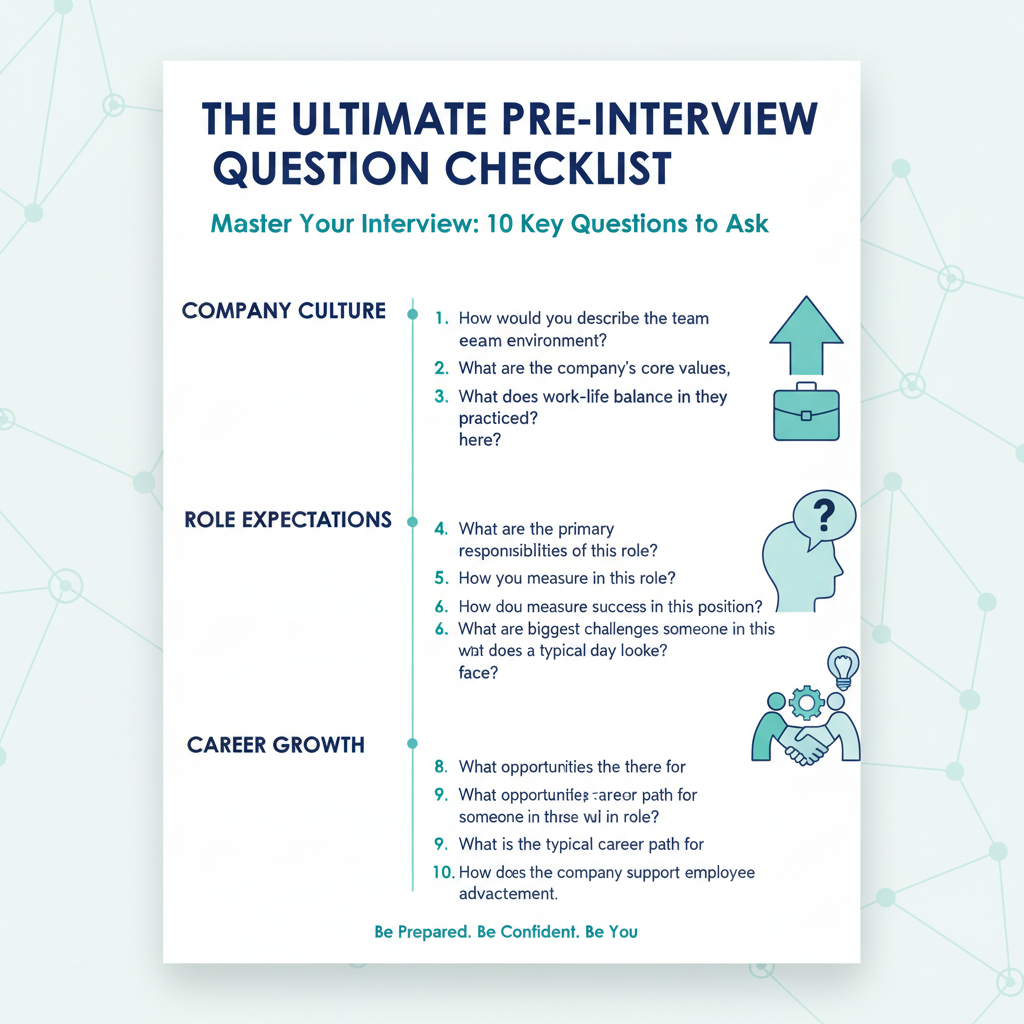
The Ultimate Pre-Interview Question Checklist
Printable checklist of smart interview questions to ask employers
The Role
- What are the most immediate projects that need to be addressed in the first 90 days?
- What are the biggest challenges the person in this role will face?
- What does a typical day look like for this position?
Performance & Success
- How will my performance be measured, and what are the key metrics for success?
- What does success look like in this role, and how do you measure it?
The Team & Management
- Can you tell me about the team I'll be working with?
- How would you describe your management style?
Company Culture & Growth
- How does the company support professional development and career growth?
- What is the company culture like here, beyond the typical buzzwords?
- What are the company's biggest goals for the upcoming year?
Tip: Print this or save it to your phone before your next interview!
Infographic: Good vs. Great Interview Questions
The Role
Generic: What do you do here? Smart: What are the most immediate projects that need to be addressed in the first 90 days? Why it's better: Shows you are eager to contribute immediately and understand short-term priorities.
Generic: Is this a new role? Smart: How has this role evolved since it was created? Why it's better: Uncovers the history of the position and potential for growth.
Performance & Success
Generic: How will I be evaluated? Smart: How will my performance be measured, and what are the key metrics for success? Why it's better: Demonstrates you are results-oriented and care about objective measurements.
The Team & Management
Generic: Who will I work with? Smart: Can you tell me about the team I'll be working with and how we'll collaborate? Why it's better: Emphasizes teamwork and a desire to integrate well with colleagues.
Company Culture & Growth
Generic: What's the culture like? Smart: How does the company support professional development and career growth? Why it's better: Shows you are looking for a long-term fit and are invested in your own continuous improvement.
Tip: Keep these smart alternatives in mind to stand out as a thoughtful and prepared candidate!
Frequently Asked Questions
Q: How many questions should I prepare for an interview? A: You should prepare at least 5 to 7 smart interview questions. However, you will likely only have time to ask 2 or 3. Having backups ensures you aren't left speechless if some of your questions are answered during the normal flow of the interview.
Q: Is it okay to write my questions down and bring them with me? A: Yes, absolutely! Bringing a notebook or portfolio with prepared questions shows that you are organized and have taken the interview seriously. It is completely acceptable to reference your notes when it's your turn to ask questions.
Q: Should I ask about salary during the first interview? A: Generally, no. Unless the interviewer explicitly brings up compensation, it's best to reserve questions about salary, benefits, and PTO for later stages of the interview process or when an offer is imminent. Focus your initial questions on the role and the company.