50+ Best "What Are Your Interests and Hobbies Examples" for Your Resume
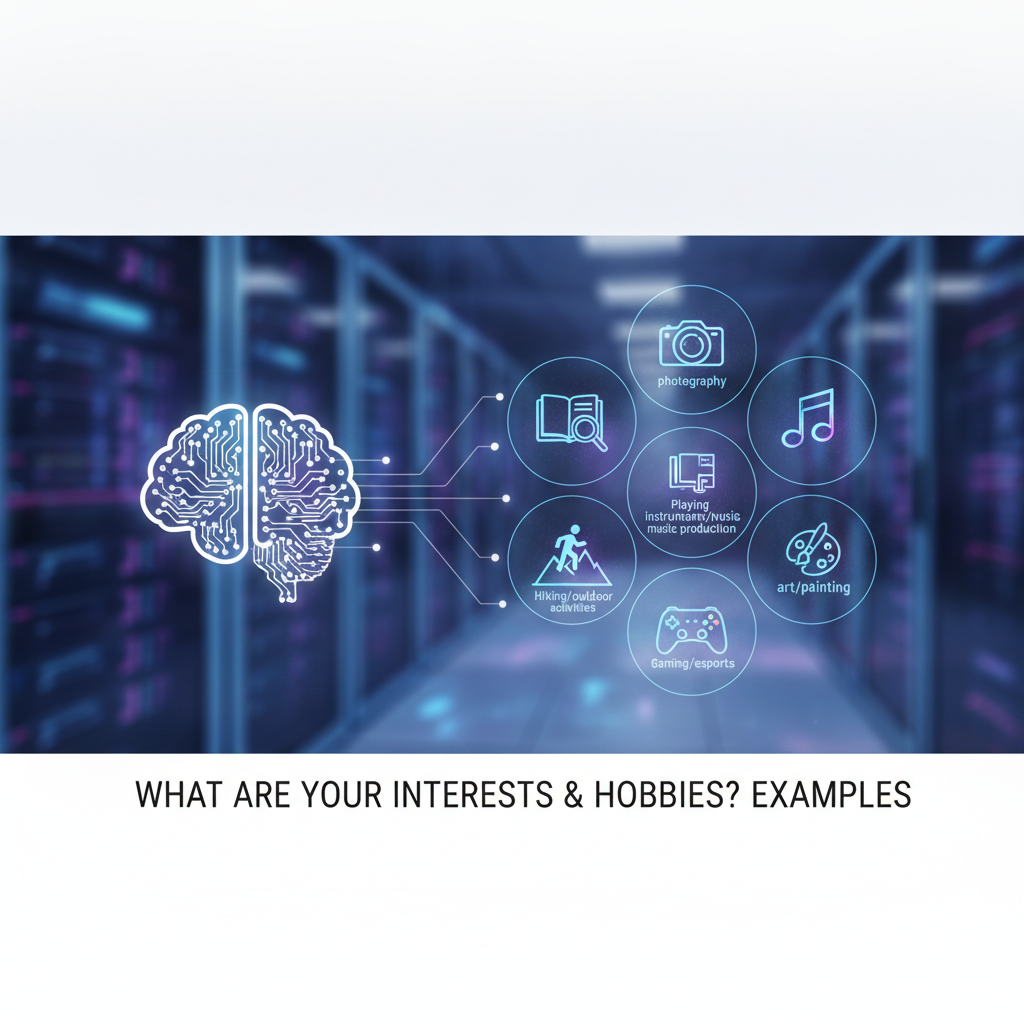
50+ Best "What Are Your Interests and Hobbies Examples" for Your Resume
Meta Description: Struggling with what are your interests and hobbies examples for your resume? Discover 50+ strategic, professional ideas to land more interviews today!
Introduction
Have you ever stared at the bottom of your resume, wondering if you should include that you love playing video games or knitting? You are not alone. Knowing exactly what are your interests and hobbies examples that actually impress hiring managers is a common pain point for job seekers.
Many candidates either leave this section blank—missing a massive opportunity to showcase their personality—or they list generic activities like "reading and traveling" that add zero value. In this comprehensive guide, we will go far beyond the basic advice you'll find elsewhere. We'll provide you with highly strategic, well-researched examples of interests and hobbies that map directly to the skills employers are actively seeking.
Whether you're writing a resume from scratch or polishing an old one, these actionable insights will help you stand out from the stack.
Hobbies vs. Interests: What’s the Difference?
Before we dive into the examples, it's crucial to understand the subtle difference between hobbies and interests, as employers view them slightly differently.
- Hobbies are active pursuits you engage in regularly for pleasure or relaxation (e.g., playing chess, rock climbing, coding open-source projects).
- Interests are subjects or topics you are curious about or study, but may not actively "do" on a daily basis (e.g., European history, renewable energy, artificial intelligence).
Why Should You Include Hobbies on Your Resume?
In today's competitive job market, your resume needs to do more than just list your previous jobs; it needs to show that you are a well-rounded human being who will fit into the company culture. In fact, studies show that a significant percentage of hiring managers consider cultural fit just as important as technical skills Harvard Business Review: Recruiting for Cultural Fit.
Adding the right hobbies can:
- Demonstrate Transferable Skills: A hobby like "organizing community marathons" shows leadership and project management.
- Act as an Icebreaker: It provides a great conversational starting point during your interview.
- Show Cultural Fit: If a company values sustainability, listing "community gardening" as an interest is a major plus.
Top "What Are Your Interests and Hobbies Examples" by Category
To make it easy for you, we've categorized the best examples based on the underlying skills they demonstrate.
1. Analytical and Problem-Solving Hobbies
If you are applying for roles in data analysis, engineering, or finance, these hobbies show you have a sharp, logical mind.
- Chess or strategy board games
- Solving logic puzzles or Rubik's cubes
- Investing or personal finance blogging
- Playing a musical instrument (shows high cognitive function)
2. Creative and Design Hobbies
Perfect for marketing, graphic design, writing, or content creation roles.
- Photography or videography
- Creative writing or maintaining a personal blog
- Painting, sketching, or digital art
- Upcycling furniture or DIY crafting
3. Leadership and Teamwork Hobbies
Ideal for management, HR, sales, or any highly collaborative role.
- Coaching a youth sports team
- Organizing community events or fundraisers
- Playing team sports (soccer, basketball, volleyball)
- Serving on the board of a local non-profit or charity
4. Tech and Programming Interests
Great for IT, software development, or technical support roles.
- Contributing to open-source software projects
- Building custom PCs or mechanical keyboards
- Developing mobile apps or simple video games
- Web design or managing a personal server
Hobby to Skill Translation Table
Use this quick comparison table to see how a simple hobby translates into a powerful resume keyword.
| Hobby/Interest Example | Transferable Skill Demonstrated | Best For Which Industries |
|---|---|---|
| Marathon Running | Discipline, goal-setting, endurance | Sales, Executive roles, Startups |
| Chess / Strategy Games | Analytical thinking, foresight, logic | IT, Finance, Operations |
| Blogging / Vlogging | Communication, digital marketing, SEO | Marketing, PR, Content creation |
| Volunteer Mentoring | Empathy, leadership, communication | HR, Management, Education |
How to Match Your Hobbies to the Job Description (Step-by-Step)
Don't just copy and paste a list. Follow these steps to tailor your hobbies to the specific job you want:
- Analyze the Job Description: Read through the job posting and highlight the key "soft skills" they are asking for (e.g., leadership, attention to detail, teamwork).
- Audit Your Own Hobbies: Make a raw list of everything you genuinely enjoy doing in your free time.
- Find the Intersection: Match the skills required by the job to the skills required by your hobbies.
- Be Specific: Instead of writing "Sports," write "Captain of a local amateur soccer league."
What NOT to Include: The Do's and Don'ts
Not all hobbies are created equal. Here is a quick guide on what to keep and what to cut.
The Do's:
- Do be highly specific (e.g., "Baking sourdough bread" instead of just "Cooking").
- Do choose hobbies that highlight positive character traits.
- Do be prepared to talk enthusiastically about any hobby you list during an interview.
The Don'ts:
- Don't list controversial hobbies (e.g., heavy political involvement or extreme religious groups).
- Don't list passive hobbies that don't add value (e.g., "Watching Netflix" or "Hanging out with friends").
- Don't lie. If you say you speak conversational French or love rock climbing, be prepared for the interviewer to test you or ask deep questions!
Elevate Your Resume with JobSeekerTools
Figuring out the perfect hobbies to include is just one piece of the puzzle. If you want to ensure your entire resume is perfectly optimized, visually appealing, and designed to beat Applicant Tracking Systems (ATS), try JobSeekerTools. Our intuitive platform analyzes your experience and helps you craft a narrative that hiring managers can't ignore, matching your unique background—hobbies and all—to your dream job.
Conclusion
Adding an "Interests and Hobbies" section to your resume is not mandatory, but when used strategically, it is a powerful tool to differentiate yourself from other candidates. By using the what are your interests and hobbies examples provided in this guide, you can successfully highlight your transferable skills, showcase your personality, and prove that you are a fantastic cultural fit. Remember, specificity is key, and always tie your personal passions back to professional value.
Visual Guides
The "Hobby to Skill" Infographic
Transforming your passions into professional value.
Description: A visually engaging infographic that maps 10 common hobbies (like running, chess, or gardening) to the specific soft skills they develop (like discipline, strategy, or patience). This is highly shareable on LinkedIn and Pinterest. Alt text: what-are-your-interests-and-hobbies-examples-skills-infographic
🏃 Running & Marathon Training
- Skills Developed: Discipline, Goal-setting, Perseverance
- Why it matters: Demonstrates the ability to commit to long-term objectives and push through challenges.
- Data Point: 72% of hiring managers view endurance sports as a strong indicator of a candidate's self-motivation.
♟️ Chess
- Skills Developed: Strategic Thinking, Problem Solving, Anticipation
- Why it matters: Shows you can analyze complex situations, anticipate competitor moves, and plan several steps ahead.
- Data Point: Chess players score significantly higher on cognitive flexibility assessments.
🌱 Gardening
- Skills Developed: Patience, Nurturing, Attention to Detail
- Why it matters: Highlights a methodical approach and the ability to foster growth over time, crucial for project management.
- Data Point: Studies show that gardening improves focus and task persistence by up to 20%.
🏀 Team Sports (Basketball, Soccer, etc.)
- Skills Developed: Collaboration, Leadership, Communication
- Why it matters: Proves you can work seamlessly within a group, handle high-pressure situations, and support team goals.
- Data Point: Over 80% of Fortune 500 executives participated in competitive sports during their youth.
📸 Photography
- Skills Developed: Creativity, Technical Proficiency, Visual Storytelling
- Why it matters: Combines technical skill with an artistic eye, useful for marketing, design, and presentation roles.
- Data Point: Candidates with creative hobbies are 35% more likely to propose innovative solutions in the workplace.
🍳 Cooking & Baking
- Skills Developed: Time Management, Precision, Adaptability
- Why it matters: Baking requires exact measurements and timing, while cooking shows you can adapt on the fly when resources change.
- Data Point: 65% of culinary enthusiasts excel in roles requiring strict adherence to procedures and timelines.
🎸 Playing a Musical Instrument
- Skills Developed: Dedication, Memorization, Continuous Learning
- Why it matters: Indicates a growth mindset and the willingness to spend hours mastering a craft through repetitive practice.
- Data Point: Musicians have enhanced neural connectivity, improving their ability to process complex information quickly.
🤝 Volunteering & Community Service
- Skills Developed: Empathy, Event Organization, Resourcefulness
- Why it matters: Shows strong character, a willingness to help others, and often involves managing projects with limited budgets.
- Data Point: 82% of interviewers are more likely to choose a candidate with volunteer experience over one without.
✍️ Writing & Blogging
- Skills Developed: Clear Communication, Research, SEO/Digital Literacy
- Why it matters: Excellent written communication is universally valued, and maintaining a blog shows self-directed learning.
- Data Point: Companies value strong writing skills in top-tier candidates across 90% of all professional roles.
🎮 Strategy Gaming & Esports
- Skills Developed: Rapid Decision-Making, Resource Allocation, Team Coordination
- Why it matters: Modern gaming requires processing vast amounts of information instantly and working with remote teams.
- Data Point: Active strategy gamers demonstrate a 25% faster reaction time in complex problem-solving scenarios.
"Should I Include This Hobby?" Flowchart
A practical guide to keeping your resume professional, yet human.
Description: A simple, humorous, yet practical yes/no flowchart that helps job seekers decide if a specific hobby is appropriate for their resume based on the industry and the hobby's nature. Alt text: flowchart-choosing-what-are-your-interests-and-hobbies-examples-for-resume
START: Do you want to list a hobby on your resume?
1. Is your hobby legal, ethical, and Safe For Work (SFW)?
- No: (e.g., amateur lockpicking, extreme streaking)
- 🛑 STOP. Do not include under any circumstances.
- Yes:
- ➡️ Proceed to Question 2.
2. Does the hobby highlight a skill directly relevant to the role?
- Yes: (e.g., Coding for a developer role, Team sports for management)
- ✅ INCLUDE IT! It proves you're a perfect fit.
- No:
- ➡️ Proceed to Question 3.
3. What is the company culture like?
- Traditional / Corporate (e.g., Law Firm, Finance):
- Is it a "safe" or classic hobby? (e.g., Reading, Golf, Volunteering, Marathon Running)
- Yes: ✅ Include it if you have extra space on your resume.
- No: 🛑 Leave it off. Stick to your professional achievements.
- Is it a "safe" or classic hobby? (e.g., Reading, Golf, Volunteering, Marathon Running)
- Modern / Casual (e.g., Tech Startup, Creative Agency):
- ➡️ Proceed to Question 4.
4. Is the hobby incredibly niche, quirky, or potentially polarizing?
- Yes, it's very unique: (e.g., Competitive Dog Grooming, 18th Century LARPing, Underwater Basket Weaving)
- ➡️ Proceed to Question 5.
- No, it's pretty standard: (e.g., Baking, Photography, Hiking, Traveling)
- ✅ INCLUDE IT! It makes you relatable, interesting, and well-rounded.
5. Are you willing (and excited) to talk about it for 10 minutes in an interview?
- Yes! I love it:
- ✅ INCLUDE IT! Quirky hobbies show immense passion and make you a highly memorable candidate.
- No, not really:
- 🛑 LEAVE IT OFF. If you can't speak passionately about it, don't write it down.
🚨 SPECIAL EXCEPTION RULE 🚨
- Is your hobby "Watching Netflix," "Sleeping," or "Hanging out with friends"?
- 🛑 ABSOLUTELY NOT. Those are basic human survival tactics, not hobbies. Remove them immediately.
Frequently Asked Questions
Q: Where should I put the hobbies and interests section on my resume? A: This section should always go at the very bottom of your resume. Your professional experience, education, and hard skills are the primary focus and should remain at the top. Hobbies are a bonus element to show personality.
Q: How many hobbies should I include? A: Keep it concise. Aim for 2 to 4 highly specific hobbies or interests. Listing too many can make your resume look cluttered and might give the impression that you won't have enough time for the job itself!
Q: What if I don't really have any hobbies? A: Think broader! Interests also count. Do you read specific types of non-fiction? Do you listen to industry podcasts? Do you volunteer occasionally? "Continuous learning in [Your Industry]" or "Attending local tech meetups" are excellent interests to list.