What Can You Do With a Creative Writing Major? 15 High-Paying Career Paths
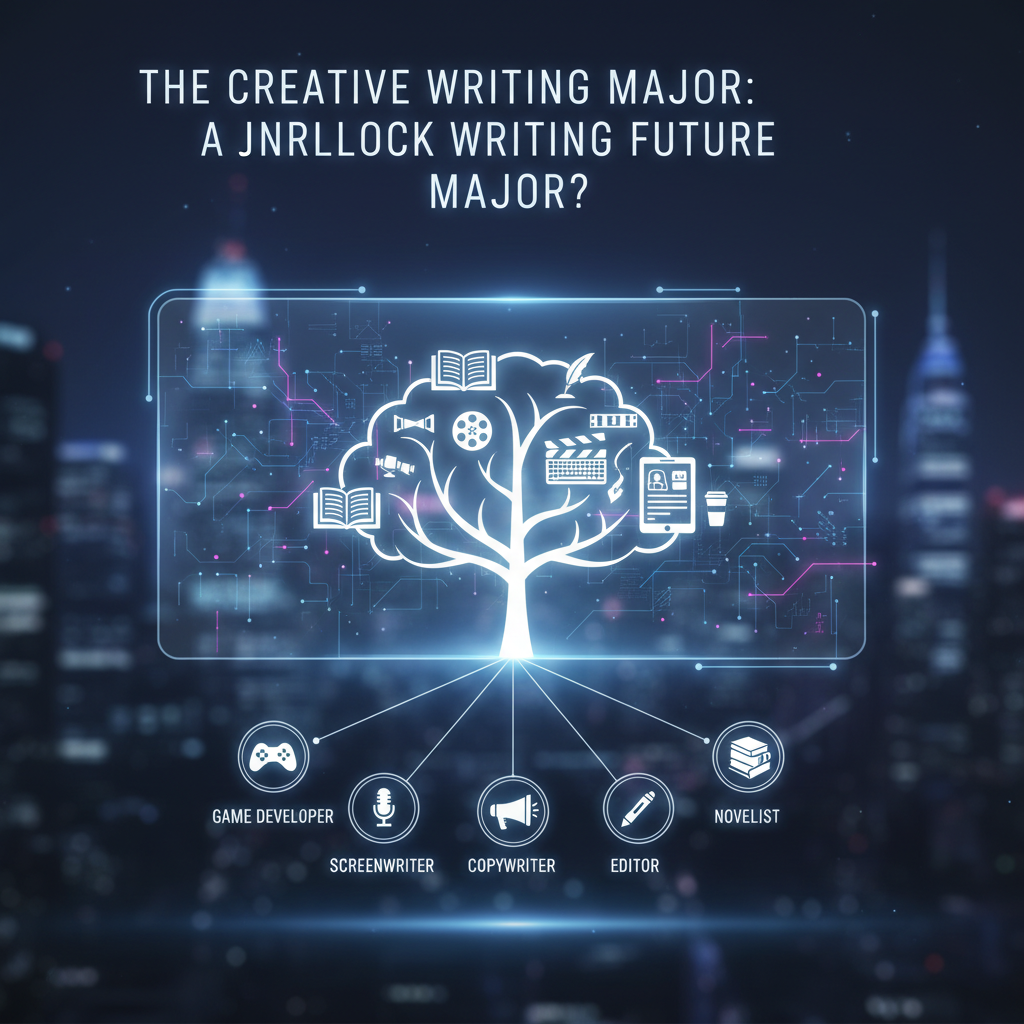
What Can You Do With a Creative Writing Major? 15 High-Paying Career Paths
Meta Description: Wondering what can you do with a creative writing major? Discover 15 lucrative career paths, actionable resume tips, and how to land your dream job today.
Introduction
So, you’ve spent the last few years dissecting classic literature, participating in intense peer workshops, and mastering the art of the perfect metaphor. Now, the real world is calling, and you're inevitably faced with the dreaded question from well-meaning friends and relatives: "What can you do with a creative writing major?"
If you're feeling anxious about your prospects, don't be. The common misconception is that your only options are writing the next Great American Novel or teaching. The reality is vastly different. In an increasingly automated and AI-driven world, the uniquely human ability to craft a compelling narrative, empathize with an audience, and communicate complex ideas clearly is more valuable than ever.
While other career blogs might give you a standard list of 10 obvious jobs, we are going to dive much deeper. This comprehensive guide will not only explore 15 diverse and lucrative career paths but also provide you with actionable, step-by-step strategies to translate your academic prowess into a highly sought-after professional toolkit.
Moving Beyond the Basics: Why Your Degree is a Superpower
When looking at standard advice on career options for writing graduates, you'll often see the same predictable roles: Journalist, Editor, Author, and PR Specialist. While excellent paths, these lists often miss the massive, hidden job market for storytellers in tech, corporate strategy, and user experience.
Furthermore, many resources fail to explain how to actually bridge the gap between analyzing poetry and writing copy that converts. To succeed, you must first understand the core transferable skills your degree has given you:
- Deep Empathy and Audience Analysis: You know how to put yourself in a character's shoes; this translates perfectly to understanding user personas and customer pain points.
- Complex Problem Solving: Structuring a 50-page thesis or a coherent plot arc requires elite organizational and logical reasoning skills.
- Persuasive Communication: You know how to use language to evoke emotion and drive action.
- Constructive Feedback Loop: Years of writing workshops have made you resilient to criticism and skilled at iterating on your work.
According to recent labor market analyses, these soft skills are precisely what employers are desperate for. World Economic Forum Future of Jobs Report 2023.
15 Lucrative Career Paths for Creative Writing Majors
Let's look at where your skills are most highly valued today, broken down by industry.
Tech and User Experience (UX)
- UX Writer / Content Designer: You craft the microcopy (buttons, error messages, menus) that guides users through digital products.
- Technical Writer: You translate complex software documentation or engineering jargon into easily digestible manuals for everyday users.
- Conversational AI Designer: You script the dialogue and personality for chatbots and virtual assistants.
Marketing and Brand Strategy
- Conversion Copywriter: You write the words on landing pages and in emails specifically designed to make people click, buy, or subscribe.
- Brand Storyteller / Corporate Communications: You define the voice, mission, and overarching narrative of a company.
- SEO Content Strategist: You combine writing skills with data analytics to create articles that rank highly on Google.
- Product Marketing Manager: You figure out how to communicate the value of a new product feature to the market.
Media, Entertainment, and Gaming
- Narrative Designer (Video Games): You write dialogue, world-building lore, and quest storylines for games.
- Podcast Producer / Scriptwriter: You structure the narrative flow, interview questions, and scripts for audio storytelling.
- Development Executive: You read scripts and book proposals to find the next big movie or TV show.
Specialized Corporate Roles
- Proposal/Grant Writer: You write persuasive documents to secure funding for nonprofits or win major corporate contracts.
- Internal Communications Specialist: You keep a company's employees informed, engaged, and aligned with leadership's goals.
- Instructional Designer: You create engaging training materials, e-learning courses, and educational videos for corporate training.
- Speechwriter: You craft compelling addresses for executives, politicians, or thought leaders.
- Medical or Legal Writer: (Requires some domain knowledge) You summarize complex regulatory, legal, or medical findings into clear reports.
Translating Academic Writing to Business Writing
One of the biggest hurdles creative writing majors face is shedding their academic habits. Business writing is not about showing off your vocabulary; it's about clarity, brevity, and driving action.
Here is a quick comparison to help you adjust your style:
| Feature | Academic / Creative Writing | Professional / Business Writing |
|---|---|---|
| Primary Goal | To explore themes, entertain, or prove a complex thesis. | To inform quickly, persuade, or drive a specific action. |
| Structure | Build up to a climax or conclusion at the end. | "Bottom Line Up Front" (BLUF) - put the most important point first. |
| Voice & Tense | Often uses complex sentence structures; mixes tenses. | Relies heavily on Active Voice and clear, concise Present Tense. |
| Formatting | Long paragraphs, minimal visual breaks. | Short paragraphs, bullet points, bold text, and clear headings. |
Step-by-Step Guide to Landing Your First Role
Transitioning from the classroom to the boardroom requires a strategic approach. Follow these steps:
- Build a Diversified Portfolio: Your senior thesis is great, but employers want to see applied writing. Create mock landing pages, write a sample press release, or redesign the UX copy of your favorite app.
- Learn the Tools of the Trade: Familiarize yourself with standard industry tools like WordPress, basic HTML, Figma (for UX), and SEO basics.
- Translate Your Resume: Stop using academic jargon. When listing your degree, focus on outcomes. (e.g., "Managed peer review process for 15+ student manuscripts, resulting in publication-ready formatting.")
- Network Strategically: Reach out to alumni on LinkedIn who hold titles you are interested in. Ask them for a 15-minute informational interview about how they transitioned into their field.
When you're ready to start applying, ensuring your resume speaks the language of the specific industry is critical. This is where JobSeekerTools comes in. Our platform helps you analyze job descriptions and optimize your resume, ensuring that the unique skills from your creative writing major perfectly align with the exact keywords hiring managers and Applicant Tracking Systems (ATS) are looking for.
Conclusion
The answer to "what can you do with a creative writing major" is: almost anything that requires clear communication, empathy, and critical thinking. By moving beyond traditional career paths, actively translating your academic skills into business value, and presenting a professional portfolio, you position yourself as an invaluable asset in the modern job market. Remember, you already know how to tell a great story—now it's time to tell the story of your career.
Visual Guides
1. Infographic: The Creative Writer's Skill Translation Map
Caption: Infographic showing what can you do with a creative writing major by mapping academic skills to corporate jobs
Academic Task to Corporate Skill Mapping
-
Fiction Workshops ➡️ Giving & Receiving Constructive Feedback
- Academic Context: Critiquing peers' stories, accepting edits on your own drafts.
- Corporate Translation: Managing design critiques, marketing copy reviews, and collaborative project management.
-
Literary Analysis ➡️ User Persona Empathy & Market Research
- Academic Context: Deep-diving into character motivations, themes, and historical context.
- Corporate Translation: Understanding target audience pain points, customer journey mapping, and qualitative UX research.
-
World-Building (Sci-Fi/Fantasy) ➡️ Brand Strategy & Systems Thinking
- Academic Context: Creating consistent rules, lore, and environments for narratives.
- Corporate Translation: Developing comprehensive brand guidelines, product positioning, and cohesive user experiences across platforms.
-
Drafting & Revisions ➡️ Agile Iteration & Content Strategy
- Academic Context: Writing multiple drafts to refine prose, plot structure, and pacing.
- Corporate Translation: A/B testing ad copy, iterating on landing page designs, and managing dynamic content calendars.
-
Poetry & Metrics ➡️ Conversion Copywriting & UX Microcopy
- Academic Context: Mastering rhythm, concise language, and maximum emotional impact in limited space.
- Corporate Translation: Crafting compelling CTAs (Calls to Action), clear error messages, and punchy ad headlines.
Key Takeaway Creative writing isn't just about telling stories; it's about mastering communication, empathy, and iteration—the exact soft skills highest in demand for modern corporate roles.
2. Comparison Chart: Academic vs. Copywriting
Caption: Comparison chart of academic writing versus business writing for creative writing degree graduates
Writing a College Essay vs. Writing a High-Converting Landing Page
| Feature | Academic Writing (College Essay) | Business Writing (Copywriting / Landing Page) |
|---|---|---|
| Primary Goal | Demonstrate knowledge, argue a complex thesis, or explore a theme. | Drive action (e.g., sign up, purchase, click), solve a user's problem. |
| Audience | Professors, academic peers, researchers. | Potential customers, users with short attention spans. |
| Tone & Style | Formal, objective, complex vocabulary, passive voice often acceptable. | Conversational, direct, simple vocabulary, active voice preferred. |
| Structure | Linear (Introduction, Body Paragraphs, Conclusion), often lengthy. | Scannable, inverted pyramid, bullet points, headers, short paragraphs. |
| Success Metric | Grades, academic citations, critical acclaim. | Conversion rates, click-through rates, revenue generated. |
| Formatting | Dense blocks of text, standard margins, strict citation styles (MLA, APA). | White space, bolding for emphasis, visual hierarchy, clear CTAs. |
| Length | Generally long-form (pages or thousands of words). | Often short, punchy, and concise (focused on keeping attention). |
Key Takeaway While academic writing builds critical thinking and research skills, copywriting demands brevity, persuasion, and a relentless focus on the user's immediate needs and actions. Translating your skills means shifting from "proving what you know" to "showing how you can help."
Frequently Asked Questions
Do I need a portfolio if I only wrote fiction in college? Yes. While fiction shows your grasp of language, employers need to see how you write for business contexts. You should create "spec" (speculative) work—write a fake email campaign for a brand you love, or rewrite a confusing instruction manual to show your versatility.
Is copywriting and content creation going to be replaced by AI? AI is a powerful tool that will change how writers work, but it will not replace the need for human strategy, empathy, and brand voice. Creative writing majors who learn to use AI as an editing and brainstorming assistant will be significantly faster and more competitive in the job market.
How do I get experience without having a professional job first? Start by freelancing on platforms like Upwork, volunteer to write a newsletter for a local nonprofit, or start a highly focused blog on a niche topic. All of these count as real-world experience that you can put on your resume.